
Events
The Rise and Fall and Rise of Communism
209 Armstrong Hall
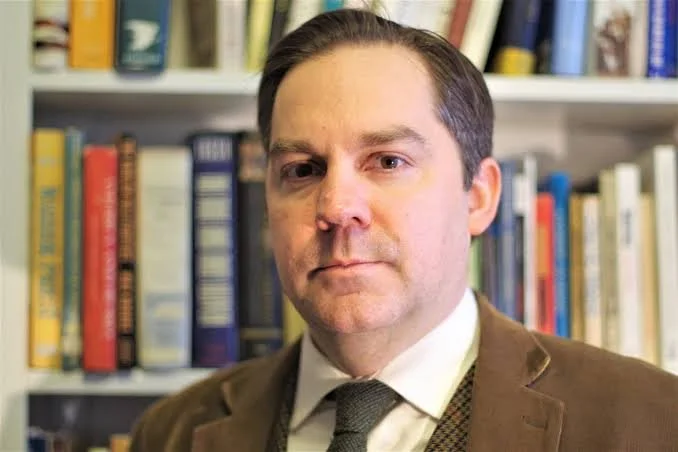
With the fall of the Berlin Wall in 1989, it seemed that communism had been confined to, in Trotsky’s words, the dustbin of history. Instead, there has been a surprising resurgence. Despite gestures in the direction of reform, Communist China has returned to a more explicit, expansive, and authoritarian Marxism. In the West, intellectuals, politicians, and the students who follow them have found new rationales for censorship, central planning, and even political violence, embracing what New York’s mayor calls the “warmth of collectivism.” The USSR and its fully planned economy may be defunct, but the creed of the commissar—the desire of statist politicians to control and direct us, and terrorize dissenters into compliance—lives on. We underestimate its appeal at our peril.
Dr. Sean McMeekin is a professor of European History and Culture at Bard College, teaching courses in modern European, Russian, Soviet, and post-Soviet history. He has also taught at Koç University in Istanbul, Yale, Bilkent in Ankara, and NYU. He is the author of Stalin’s War (2021); The Russian Revolution (2017); The Ottoman Endgame: War, Revolution, and the Making of the Modern Middle East (2015, awarded the Arthur Goodzeit Book Prize); July 1914: Countdown to War (2013, reviewed on the cover of the New York Times Sunday Book Review); The Russian Origins of the First World War (2011, winner of the Norman B. Tomlinson Jr. Book Prize); The Berlin-Baghdad Express: The Ottoman Empire and Germany’s Bid for World Power (2010, winner of the Barbara Jelavich Book Prize); History’s Greatest Heist: The Looting of Russia by the Bolsheviks (2008); The Red Millionaire (2004); and numerous articles and essays. McMeekin also reviews books regularly for the Sunday Times, The Literary Review, American Historical Review, History Today, Journal of Modern History, Slavic Review, and Journal of Cold War Studies.
In Honorem Sanctae Crucis—The Most Complicated Book Ever Written
220 Hodges Hall
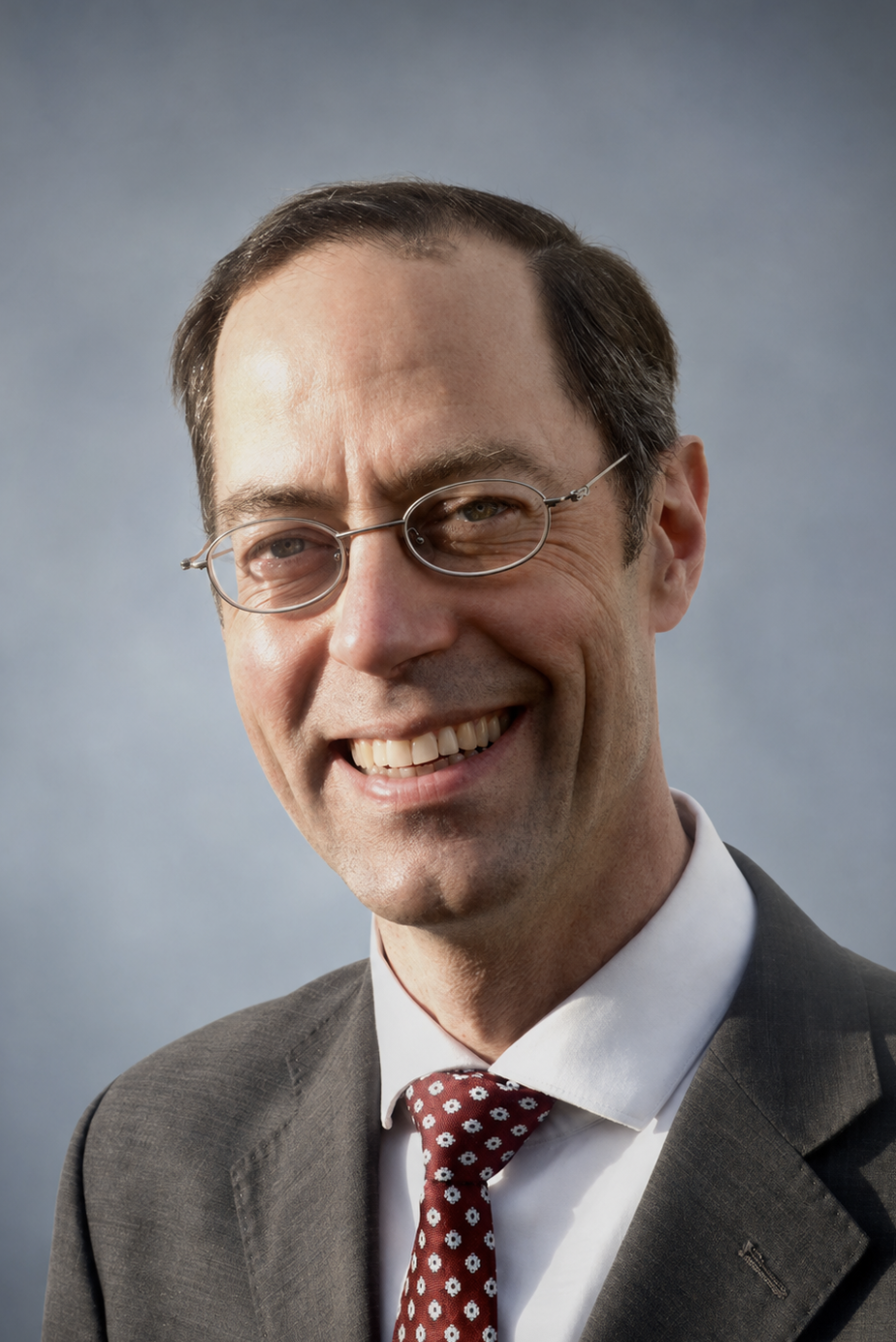
Dr. Eric Hewett presents the In Honorem Sanctae Crucis, the most complicated book ever written by a single author. This early medieval text, despite its date of composition of ca. 810 AD, is shockingly post-modern. It combines such varied means of expression as poetry, art, prose, philosophy, theology, and numerology into a single artwork. The figurative elements define and constitute multiple levels of poetic language, so that many individual letters function simultaneously on different levels. Each individual poem uses a set of these artistic-literary units to relate some aspect of the universe to the Crucifixion, while the complete work aims, with cosmological ambition rivaling that of the Sistine Chapel, to present the Cross of Jesus Christ as the hermeneutical key for interpreting all phenomena, or, as the author Rabanus Maurus himself put it, the “consummation and perfection of all things.
Dr. Eric Hewett is Assistant Professor of Statesmanship at the Washington Center. He earned a joint Ph.D. in “Philosophy, Sciences and Culture of the Late Antique, Medieval and Humanistic Eras” from the University of Salerno in Italy and in “Patristic Sciences” from the Pontifical Patristic Institute Augustinianum in Vatican City in 2013. His dissertation, The Encounter of Art and Language in Hrabanus Maurus’ In Honorem Sanctae Crucis and the Communication of Philosophical and Theological Content, analyzes the formal and semantic structures of one of the most complex works of poetry ever composed, a product of the 9th-century Carolingian Renaissance. In 2016, the Society for Classical Studies honored him with its President’s Award for extraordinary service to the field of Classics. More recently, he has published on theological and philosophical aspects of contemporary debate within Roman Catholicism concerning the death penalty. Hewett will teach courses on Ancient Rome, early Christianity, medieval Europe, and rhetoric at the Washington Center. He is fluent or proficient in German, French, Italian, Spanish, Basque, Latin, Ancient Greek, and Sanskrit, and is a published translator of Italian scholarly works and Basque poetry.
Strength Through Peace: The Case for Defensive Neutrality in the Middle East
A quarter century after 9/11, three years after the October 7th attacks in Israel, and six months into war with Iran, the American government remains as involved as ever in the Middle East. The basic question remains, however: is this involvement good for the American people?
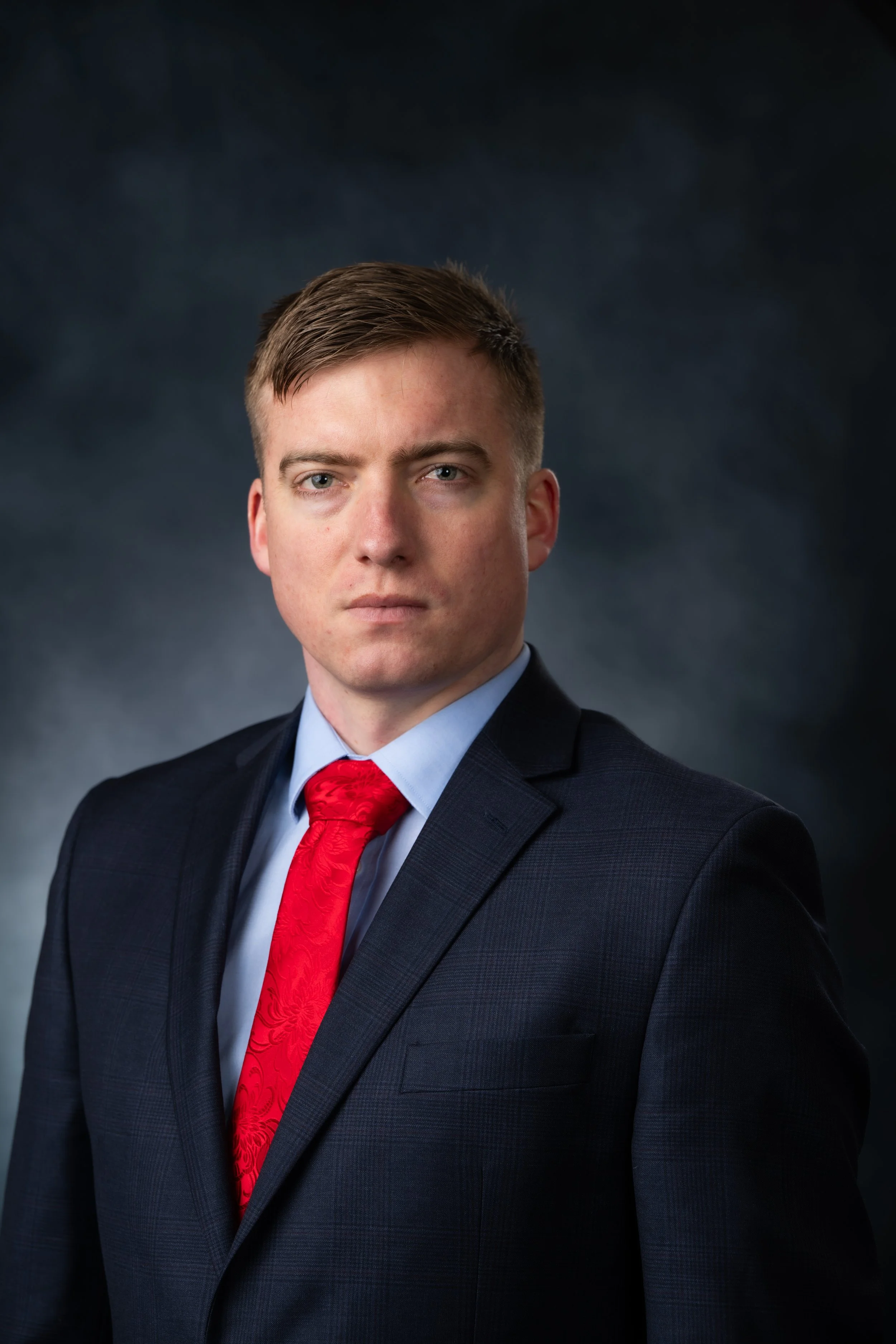
In this talk, Dr. Josiah Lippincott of the Washington Center will challenge the bipartisan consensus undergirding American involvement in the Middle East, addressing common arguments for the supposed economic and national defense necessity of intervention.
Dr. Lippincott is Assistant Professor of Statesmanship at the Washington Center. He received his Ph.D. in Politics from Hillsdale College in 2026, and his M.A. and B.A. in Politics in 2022 and 2016, respectively. His research focuses on American political thought, classical and modern political philosophy, and the history of American foreign policy, including his dissertation on Franklin Roosevelt, the Pacific War, and the transformation of American foreign-policy principles from the Founding through World War II. Before entering academia, Lippincott served from 2016 to 2020 as a United States Marine Corps artillery officer with 5th Battalion, 11th Marines, including a 2019 deployment to Okinawa through the Unit Deployment Program. He was a Publius Fellow at the Claremont Institute in 2020.

Democracy and the Academy
The professoriate wields enormous power over society in the long run. They shape the future elites, especially because a university degree is essential for social advancement. But the academy is not democratically accountable: who is hired and what is taught is determined by the professoriate, not the public. What’s more, the academy is politically homogeneous. Do universities then undermine democratic legitimacy? In other words, do we live in a true democracy, given the unchecked power of the professoriate? This talk will explore the uneasy relationship between democratic ideals and the modern university system as it stands.
Hrishikesh Joshi is Associate Professor in the Department of Philosophy at the University of Arizona and a core faculty member at the Center for the Philosophy of Freedom. He previously taught at Bowling Green State University and held a postdoctoral research fellowship at the University of Michigan, Ann Arbor. His research focuses on normative issues at the intersection of philosophy, politics, and economics, with recent work on epistemological questions in this area, as well as meta-ethics and ethical theory.
The Real Constitution
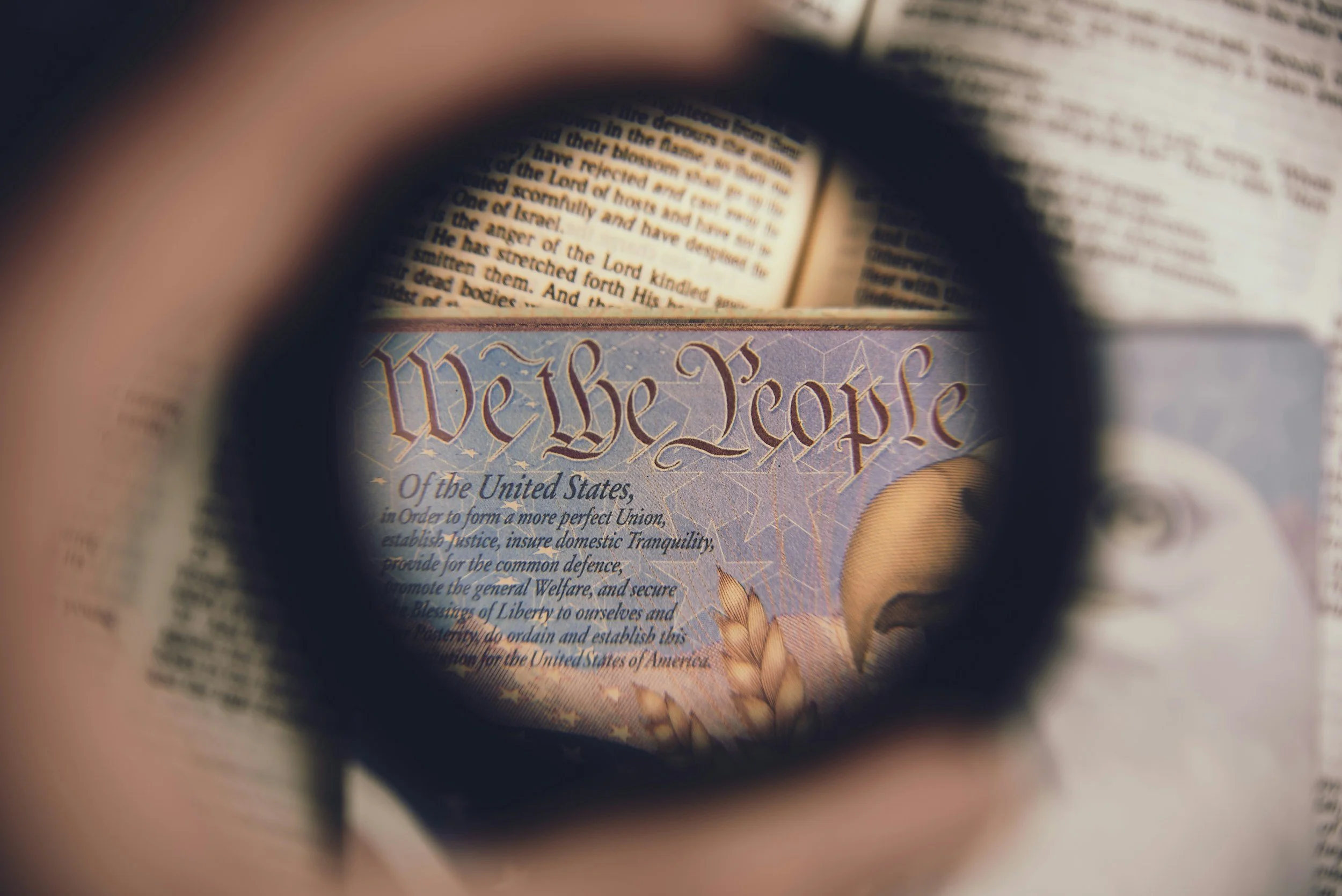
Join the Washington Center of Civics, Culture, and Statesmanship this Thursday for a public lecture by the Center's Director, who will examine the distinction between America's written Constitution and the unwritten constitution under which we actually live.
What is our constitution? Is it the Constitution drafted in 1787 and ratified in 1788? In an obvious sense, no: it was soon amended with the Bill of Rights in 1791, and then amended many times thereafter. But do we live under the Constitution with all its subsequent amendments? In a sense that is not so obvious, again no. Beginning with an ancient distinction between the written and the unwritten constitution, this talk will present a map of the unwritten constitution according to which we actually live. This unwritten constitution is not only different from the written constitution; it is opposed to it. After recognizing this hidden opposition, what’s really going on in many current political controversies will become clearer. The purpose of the talk is not to say which constitution we should have, nor is it to provide the correct answers to any current controversy. The talk’s purpose is instead to dispel some myths about them, so that political actors (whichever side they take in these controversies) can act more honestly.
This talk is being given at the invitation of Young Americans for Freedom (YAF), WVU chapter, in recognition of Constitution Day.
Do Universities Need Radical Reform?
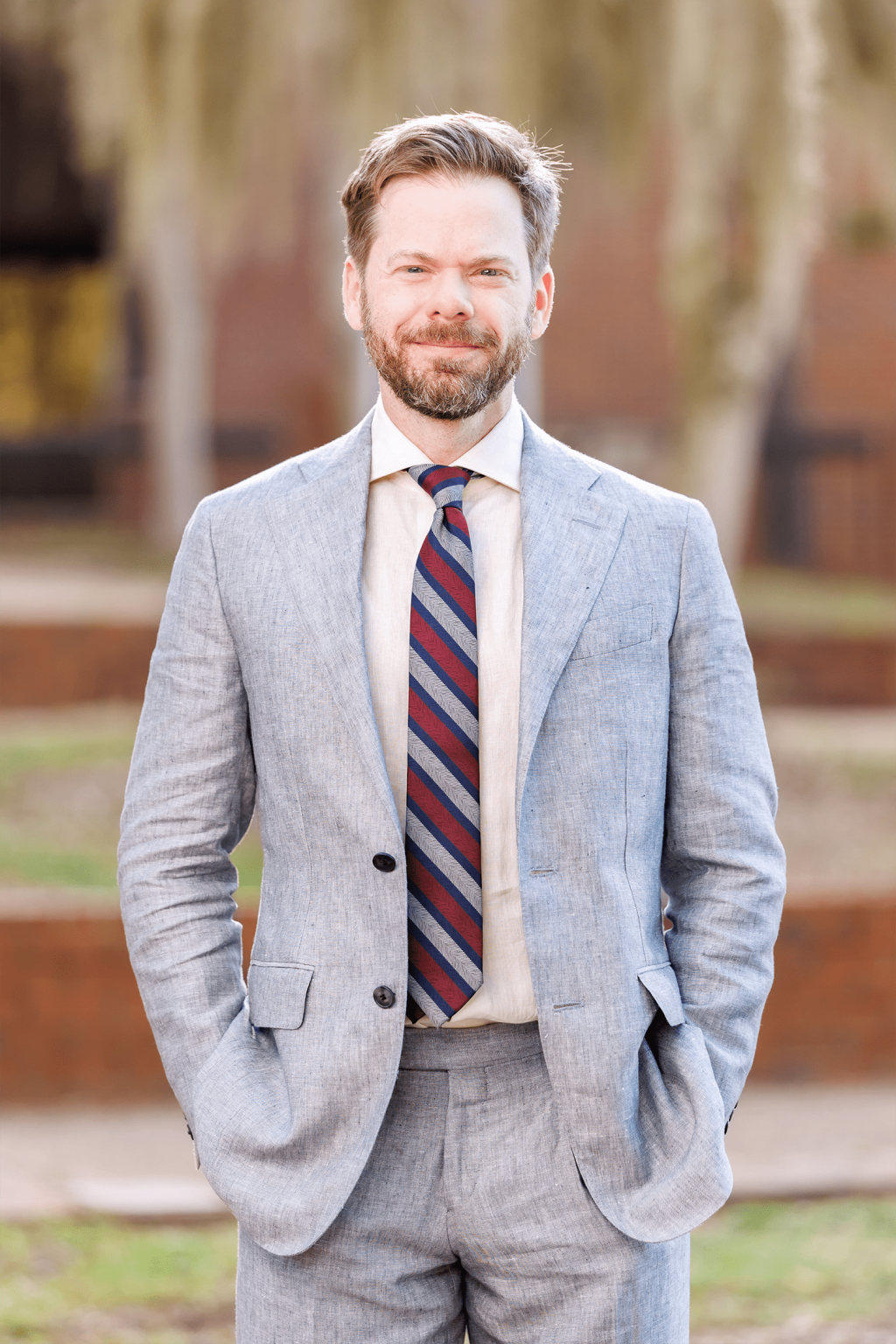
Everyone seems to agree that universities have problems and need some kind of reform. But what are the problems and what kind of reforms are needed? Unfortunately, higher education’s pathologies are too pervasive, too widespread, and too entrenched for universities to be able to make the necessary reforms themselves. If universities are to be repaired, the reform must be radical: it must come from those outside the ivory tower.
Brandon Warmke is Associate Professor of Humanities at the University of Florida's Hamilton School for Classical and Civic Education. He was previously Associate Professor of Philosophy at Bowling Green State University and, during the 2023–2024 academic year, a visiting fellow at the Benson Center for the Study of Western Civilization at the University of Colorado, Boulder. His research spans moral responsibility, forgiveness, free expression, and public discourse.